Why this site exists
Most advice about planning is actively harmful. In most companies, planning is corporate theater—high on activity, low on impact.
“A good deal of the corporate planning I have observed is like a ritual rain dance; it has no effect on the weather that follows, but those who engage in it think it does. Moreover, it seems to me that much of the advice and instruction related to corporate planning is directed at improving the dancing, not the weather.” — Russell Ackoff
This site offers a way out of the theater: what effective planning actually looks like—and how to finally make it work.
What this site is about
Thoughts—some right, some wrong—on how planning drives or derails performance. Not advice. Not another acronym. Better thinking. Better odds.
This is about performance of the whole in the long term, while most of the dancing is about the illusion of performance of the parts in the short term. This is about driving real results—while the theater is about gaming the system.
Grounded in first principles, systems thinking, and a synthesis of what billion-dollar CEOs, top academics, consultants, and practitioners have tried, failed, and learned—pressure-tested across 30,000 hours inside successful global companies.
Symptoms of bad planning
↳ No long-term growth
↳ Mistaking “having a plan” as the purpose of planning
↳ Obsessing over “hitting the plan”—as if shareholders care
↳ Cutting marketing (again) to “hit the plan”
↳ Believing planning only works in stable environments
↳ Believing planning kills agility
↳ Believing budgets make good targets
↳ Failed planning transformations—little to show
↳ Misaligned functions working in silos
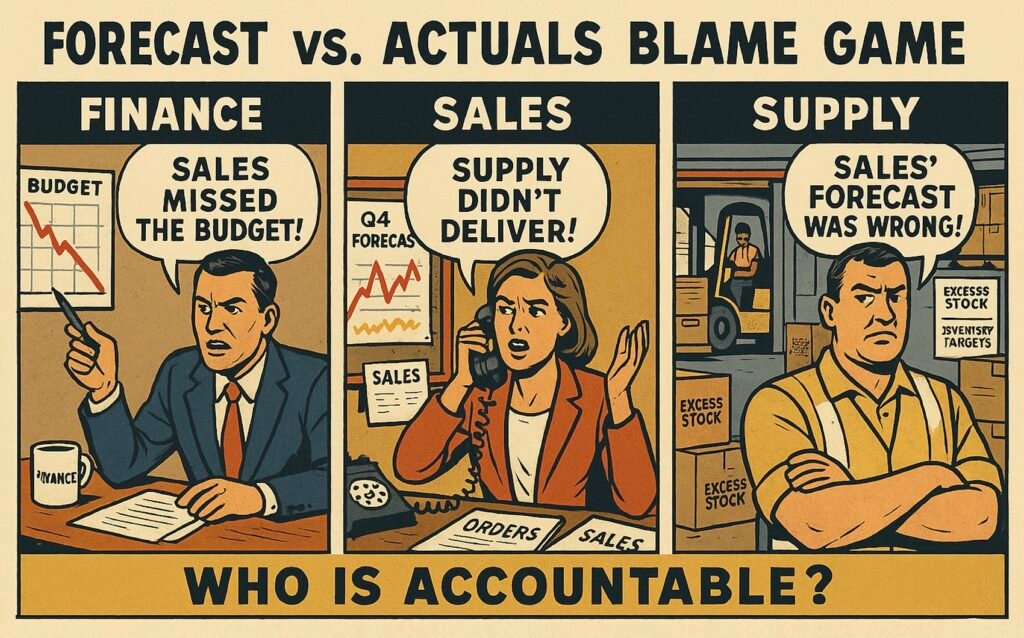
↳ Quarter-end forecast vs. actual blame games
↳ Complaining “the numbers keep changing”
↳ Finance and Supply both forecasting demand
↳ Planning owned by a planning team, not business leaders
↳ Planning separate from performance management
↳ 100-page decks from the annual “strategic planning”
↳ Struggling with “strategy” or “execution”
These are signs that a company is more focused on the dancing and the theater than on performance. They’re symptoms of Type III errors—solving the wrong problem. Not bugs, or signs of poor execution, but features of flawed thinking.
Who this is for
For people who know there’s a better way—and already have many of the puzzle pieces. Just not the time to finish it.
People who want to understand from first principles how planning works—and why it often doesn’t—regardless of what brand or framework it’s packaged under.
This is for the 2-hour podcast audience, not the TikTok audience. People who don’t want to read a 300-page book just to get a single good idea—but also know they won’t find real insights or depth in social media posts either.
If you’ve ever read a book and thought, “This could’ve been a long blog post,” this is where you’ll find those blog posts. If you think the content here is too long, your need is valid—you’re just in the wrong place.
What this is not
This is not a toolkit. Not a “how-to” manual on budgeting, strategic planning, xP&A, rolling forecasting, S&OP, or OKRs. Not a product demo, app, or sales funnel.
You won’t find:
Tips for how to improve annual budgeting.
Strategy templates or buzzword frameworks.
Definitions for xP&A, “driver-based” anything, or “agile” planning.
Excel tricks or AI hype.
There’s nothing wrong with any of that. There’s just plenty of it already. You also won’t find quick tips designed to fit your current way of thinking—if they exist, you’ve probably already heard them or can figure them out yourself.
What the name means
Indispensable Planning comes from a quote often attributed to Eisenhower:
“Plans are useless, but planning is indispensable.”
It captures the core difference between how most companies approach planning—and what actually works.
Most companies obsesses over plans—creating them, executing them, “hitting” them. Effective planning focuses on improving decisions, decision quality, and decision odds. It treats plans as means, not ends.
As Russell Ackoff wrote in Concept of Corporate Planning (1970):
“Planning should be a continuous process and hence no plan is ever final; it is always subject to revision. A plan therefore is not the final product of the planning process; it is an interim report.”
The name also reflects a deeper truth: planning is like breathing. Everyone does it. No way to avoid it. And it has a massive impact on performance—yet most of that potential is lost by many to poor common practices.
Ackoff again:
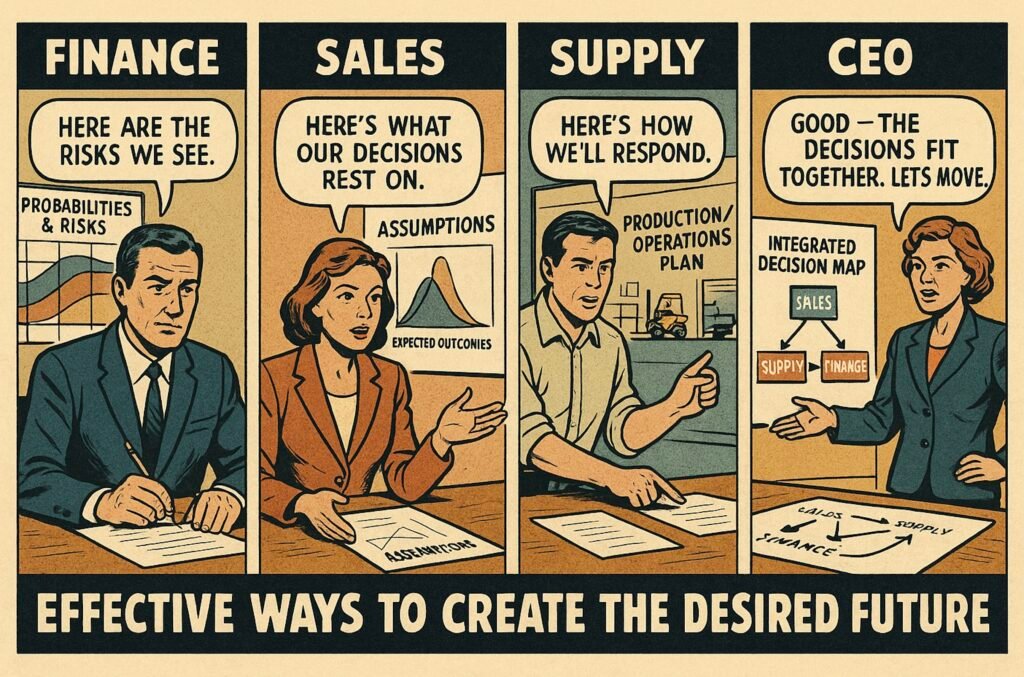
“Planning is the design of a desired future and of effective ways of bringing it about. It is an instrument that is used by the wise, but not by the wise alone. When conducted by lesser men it often becomes an irrelevant ritual that produces short-run peace of mind, but not the future that is longed for.”
© 2024 Indispensable Planning